What Is the Best Dog Food for Boston Terriers? A Label-Based Answer
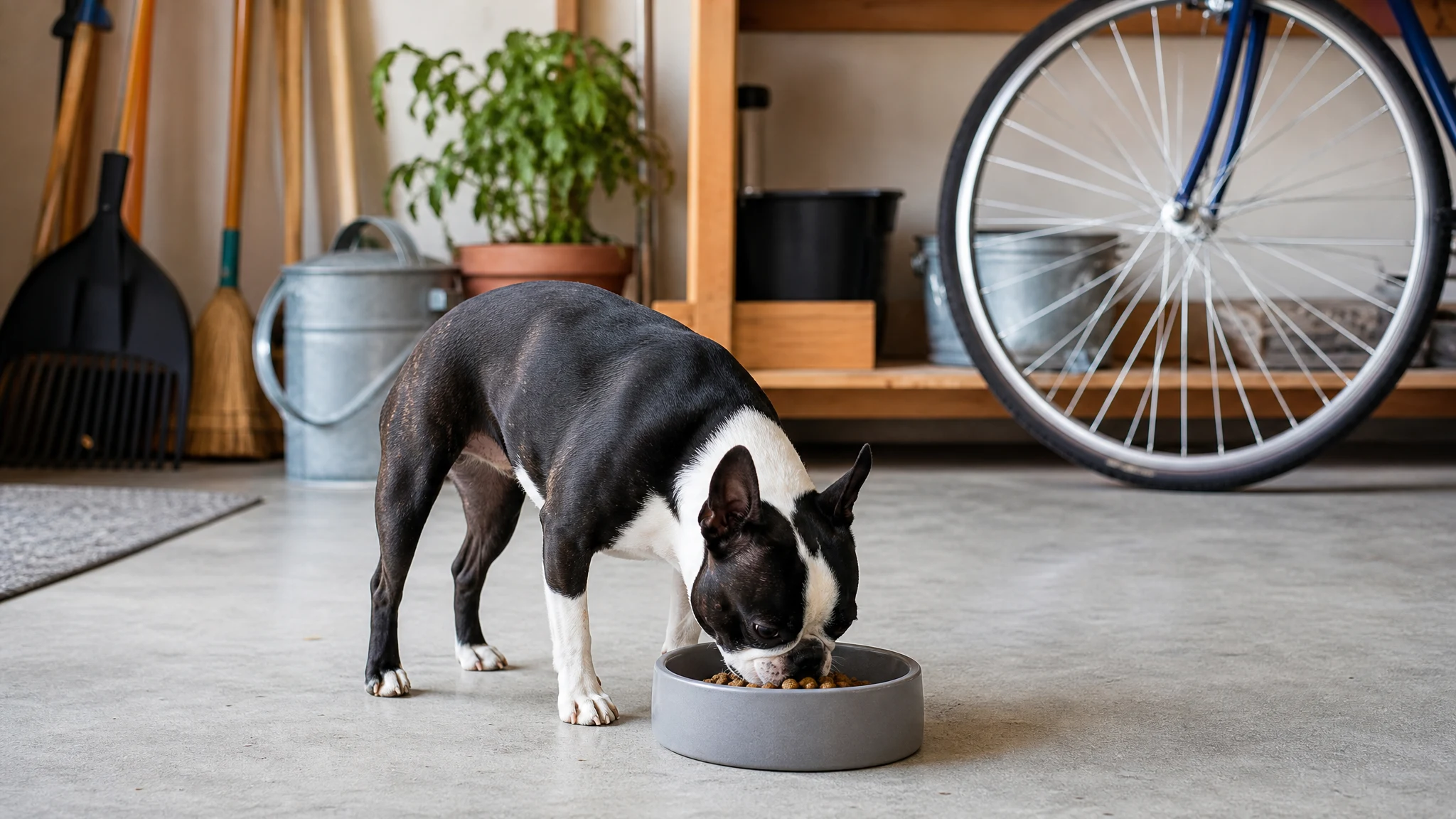
General nutrition information compiled from product labels and published sources, not veterinary advice. Your veterinarian is the right person to choose a diet for your dog, especially one with a health condition.
There is no single winner. Anyone who names one food for every dog is selling something. A better question is how to read a label so you can judge a food for your own dog.
This guide walks through that method for a Boston Terrier. It uses real label data from a few brands as examples. We compared label data only. We did not run feeding trials or taste tests, and nothing here is a ranking of how dogs do on these foods.
What you need before you start
- Your dog's current weight and age.
- The bag or can of any food you are considering, or the brand's own product page.
- A kitchen scale or measuring cup.
- A note of any skin, stomach or breathing concerns to raise with your veterinarian.
- About 20 minutes.
Why the breed matters for food choices
Boston Terriers are small. Wikipedia, summarizing the AKC standard, lists weight classes of under 15 lb, 15 to under 20 lb, and 20 to 25 lb. That fits the size range of small-breed formulas, such as Hill's Science Diet Small & Mini (up to 25 lb full grown).
Weight control also matters for this breed. A 2025 Vet Times report on a PLOS One study found that 62.5 percent of 104 tested Boston Terriers had some grade of brachycephalic airway obstruction (BOAS). Boston Terriers were less severely affected than English or French Bulldogs in that study. Extra weight can make breathing harder for flat-faced dogs, so calories and portions deserve attention. Your veterinarian decides what is right for an individual dog.
No brand we checked makes a Boston Terrier-specific formula. Royal Canin, for example, sells size-based small-breed foods, not breed-specific ones. Be skeptical of any bag that claims otherwise, and check the brand's own page.
Step 1: Pick the right life stage
Find the AAFCO statement, usually in small print near the ingredient list. It says whether the food is for maintenance (adults), growth (puppies) or all life stages.
A puppy needs a growth or all-life-stages statement. An adult needs maintenance or all life stages. We could not confirm from a source at what age a Boston Terrier counts as an adult, so ask your veterinarian when to switch.
You may see "growth including growth of large size dogs (70 lb. or more as an adult)." Whole Dog Journal explains that AAFCO defines large-size as 70 lb or more as an adult. A Boston Terrier is far below that, so this wording does not rule a puppy food out.
Step 2: Confirm the food is complete and balanced
Look for the phrase "formulated to meet the nutritional levels established by the AAFCO Dog Food Nutrient Profiles" or "animal feeding tests using AAFCO procedures substantiate." Both are ways a brand supports a complete and balanced claim.
If a product page has no such statement, do not assume it. Check the bag or ask the brand. The Merrick Kitchen Comforts Small Breed page we reviewed showed no AAFCO adequacy statement, so check the bag before buying.
Step 3: Read the first five ingredients
Ingredients are listed by weight before cooking. The first five give a rough picture, nothing more. Marketing words on the front of a bag are not a substitute.
Here are the first five ingredients as shown on each brand's page. They can change by bag.
- Royal Canin Small Adult: corn, chicken by-product meal, brewers rice, brown rice, corn protein meal.
- Hill's Science Diet Adult Small & Mini Chicken & Brown Rice: chicken, brown rice, whole grain wheat, whole grain corn, brewers rice.
- Merrick Kitchen Comforts Small Breed Chicken & Brown Rice: chicken, chicken meal, brown rice, barley, oatmeal.
- Nom Nom Chicken Cuisine (fresh): chicken, sweet potatoes, squash, spinach, fish oil.
A by-product meal or a grain in the first spots is not automatically good or bad. It is a fact to weigh with your veterinarian, especially if your dog has a known sensitivity.
Step 4: Compare protein, fat and calories
Use the guaranteed analysis for protein and fat, and the calorie statement for energy. Watch the units. Dry, canned and fresh foods hold different amounts of water, so compare like with like.
| Food | AAFCO statement | Protein | Fat | Calories |
|---|---|---|---|---|
| Royal Canin Small Adult (dry) | Maintenance | 25% min | 14% min | 359 kcal ME per cup |
| Royal Canin Small Puppy (dry) | Growth | 29% min | 18% min | 349 kcal ME per cup |
| Hill's Adult Small & Mini (dry) | Maintenance, feeding tests | 25% (dry matter average) | 15.3% (dry matter average) | 357 kcal per cup |
| Merrick Kitchen Comforts Small Breed (dry) | Not found on page | 27% min | 16% min | 467 kcal per cup |
| Nom Nom Chicken Cuisine (fresh) | All life stages | 6.5% min | 4.5% min | 244 kcal per cup |
Two cautions on this table. Hill's publishes average nutrient content on a dry matter basis, not as-fed minimums, so its numbers are not directly comparable to the others. Nom Nom is a fresh food with far more moisture, so its low percentages do not mean less nutrition.
The calorie column is the one many owners overlook. Merrick lists 467 kcal per cup against about 350 to 360 for the Royal Canin and Hill's adult foods. A cup of one is not a cup of another. That matters for a small dog whose weight is worth watching.
For a longer side-by-side, see our label comparison of dog foods for Boston Terriers.
Step 5: Use the feeding guide as a starting point
Feeding charts are starting points, not prescriptions. Hill's Adult Small & Mini lists these daily amounts:
- 15 lb dog: 1 1/3 cups (130 g).
- 20 lb dog: 1 2/3 cups (160 g).
- 25 lb dog: 2 cups (190 g).
Royal Canin recommends feeding its small adult diet in 2 to 4 equal portions per day. Its small puppy page offers a calculator for a tailored amount. Weigh portions instead of guessing with a scoop, and adjust with your veterinarian based on body condition.
Step 6: Ask about health concerns before switching
No food on this page prevents, treats or cures any condition. If your dog has itchy skin, gas or other signs, talk to your veterinarian first. Wikipedia lists atopic dermatitis and allergic skin disease among the breed's skin conditions.
One fresh-food company, Nom Nom, says corn and soy are the main triggers for Boston Terrier food allergies and recommends an 8-week single-ingredient trial. That is a company's claim, not clinical evidence. Elimination trials and prescription diets are decisions for a veterinarian.
You may also have heard about diet and dilated cardiomyopathy (DCM). The FDA's last update on its investigation page is dated December 23, 2022. The agency says adverse event reports alone do not establish causation and that it does not plan more public updates without meaningful new science. Ask your veterinarian how that applies to your dog.
Step 7: Switch foods slowly
Mix a little of the new food into the old and shift the ratio over about a week. If your dog has loose stools or refuses the new food, pause and call your veterinarian. We do not have a source on a precise schedule for this breed, so treat any timeline as general practice.
Common mistakes to avoid
- Comparing percentages across dry, canned and fresh foods. Moisture changes the numbers.
- Treating dry matter averages as label minimums. They are different measures.
- Ignoring calories per cup. It is the easiest way to overfeed a small dog.
- Trusting front-of-bag claims. Read the AAFCO statement instead.
- Adding supplements without asking. Your veterinarian can advise on whether any are needed.
- Following a feeding chart blindly. Adjust to your dog's body condition.
What to expect
If you choose a complete and balanced food for the right life stage and feed measured portions, many dogs maintain a steady weight and healthy stools. Results vary from dog to dog, and no label can promise an outcome. Follow your veterinarian's advice, and recheck your dog's weight every few weeks at first.
The short answer
The best food is a complete and balanced one for your Boston Terrier's life stage, with a calorie level that suits their weight, ingredients that suit their tolerances, and a brand whose label you can verify. Several small-breed formulas fit that description on paper. Your veterinarian can help you choose among them.
Sources
- FDA Center for Veterinary Medicine: investigation into diets and canine dilated cardiomyopathy
- Vet Times: Boston Terrier brachycephaly analysis
- Royal Canin Small Adult
- Royal Canin Small Puppy
- Hill's Science Diet Adult Small & Mini
- Merrick Kitchen Comforts Small Breed
- Nom Nom Chicken Cuisine
- Wikipedia: Boston Terrier (secondary source for weight classes and skin conditions)
- Whole Dog Journal: large breed puppy food (secondary source for the AAFCO 70 lb threshold)