Blueberries for Boston Terriers: How Much Is Safe
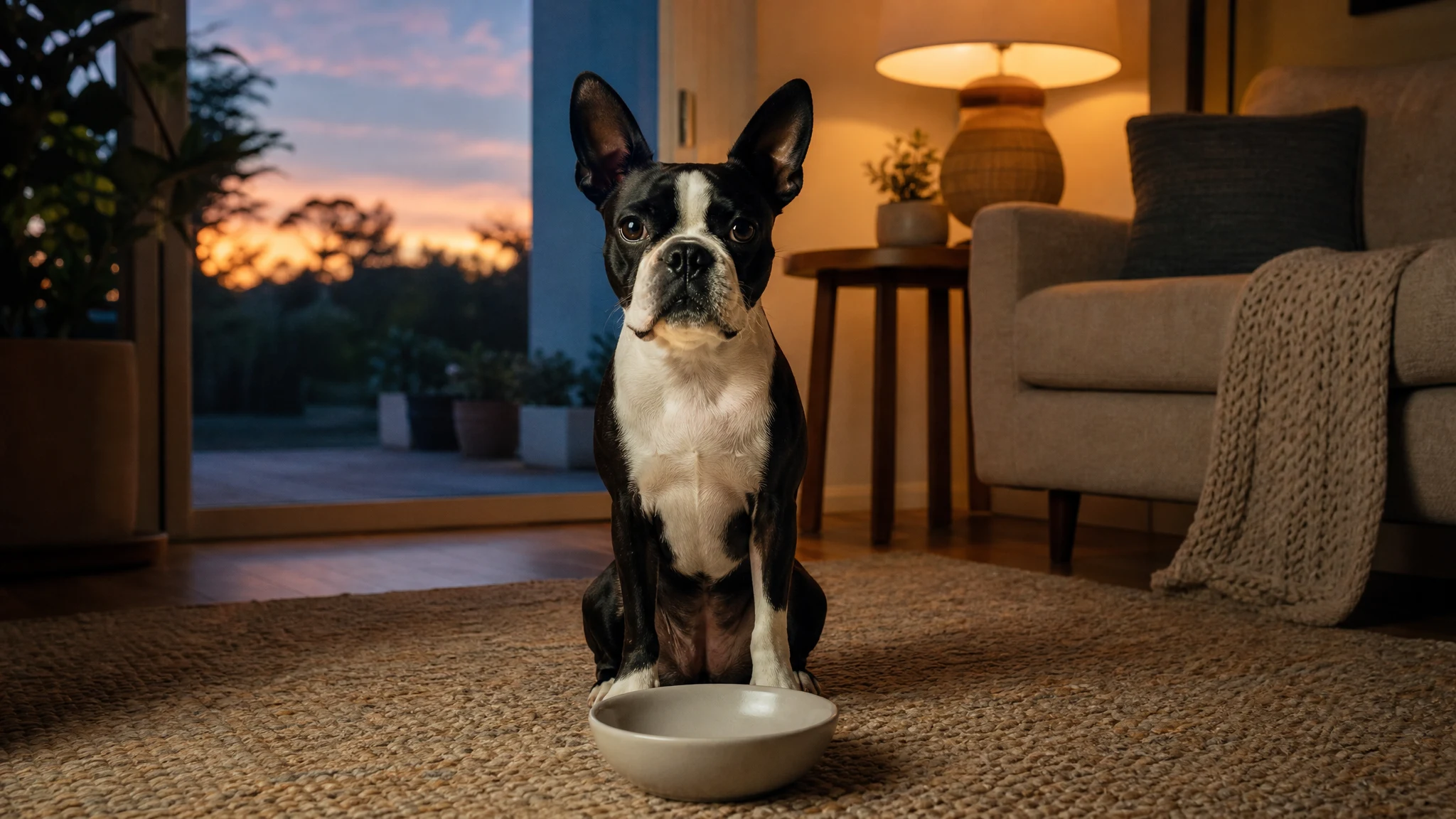
General nutrition information compiled from product labels and published sources, not veterinary advice. Your veterinarian is the right person to choose a diet for your dog, especially one with a health condition.
Many owners wonder, can Boston Terriers eat blueberries? Plain blueberries are a common food to offer a dog as a small treat. But the honest answer to "how much" depends on your individual dog, and no breed source we relied on gives a blueberry amount for Boston Terriers.
So this guide does not invent a number. It shows you a careful way to introduce a few berries, how to fit them around your dog's regular food, and what to ask your veterinarian before you start.
Why the amount matters for this breed
Boston Terriers are small dogs. Wikipedia, summarizing the American Kennel Club (AKC) standard, lists weight classes of under 15 lb, 15 lb up to 20 lb, and 20 lb not exceeding 25 lb. At that size, a handful of treats can be a large share of a day's food.
Weight also ties to breathing. Vet Times, reporting on a PLOS One study published in January 2025, found that 62.5 percent of 104 tested Boston Terriers had some grade of brachycephalic airway obstruction (BOAS). Boston Terriers showed less severe BOAS than English or French Bulldogs, but it is still common. Weight control matters for breathing in flat-faced breeds, so extra treat calories are worth keeping in check.
Wikipedia also lists atopic dermatitis and allergic skin disease among the breed's skin conditions. That is one reason to add new foods slowly, one at a time, so you can tell what caused any change.
What you need
- Fresh or frozen plain blueberries, with nothing added. No sugar, syrup, yogurt coating, or sweetener.
- Clean water and a colander for rinsing.
- Your dog's regular food and its bag or can label.
- A kitchen scale or a small measuring spoon, so portions stay consistent.
- A notebook or phone note to log what your dog ate and how they did.
- Your veterinarian's phone number or portal, for the questions below.
Step-by-step: introducing blueberries
Step 1: Check with your veterinarian first
Ask whether blueberries suit your particular dog. A veterinarian decides for an individual dog, and your dog's weight, health history, and any diet plan all matter. Ask for a number of berries that fits your dog's size and daily calories. If your dog is on a prescription diet, ask before adding anything.
Step 2: Pick plain berries and rinse them
Choose plain fresh or frozen blueberries. Skip pie filling, muffins, jams, and trail mixes, which can carry sugar, fat, or other ingredients that are not part of this plan. Rinse fresh berries under water and remove stems and any soft or moldy ones.
Step 3: Start with one or two berries
For a first try, offer one or two berries on a day when nothing else in your dog's routine has changed. Do not add a new chew, a new treat, and a new food the same week. If something upsets your dog, you will want a clear suspect.
Step 4: Think about size and chewing
Blueberries are small, but dogs that gulp can still swallow them whole. Boston Terriers have short noses and can be eager eaters. If your dog tends to inhale treats, cut berries in half or mash them lightly. Stay with your dog while they eat.
Step 5: Watch for a day or two
Look at stool, appetite, energy, itching, and any vomiting. Write down what you see. If anything looks off, stop the berries and call your veterinarian. Contact your vet right away if your dog has trouble breathing, swelling of the face, or repeated vomiting.
Step 6: Count the berries as part of the day's food
Treats add calories on top of meals. Look at the calorie line on your dog's food label and keep treats modest compared with it. For example, the Hill's Science Diet Adult Small & Mini Chicken & Brown Rice Recipe lists 357 kcal per cup, and its feeding guide gives 1 1/3 cups a day for a 15 lb dog and 1 2/3 cups for a 20 lb dog. Those are label starting points for that food, not a rule for your dog. Ask your veterinarian how many treat calories fit in your dog's day.
I do not have a sourced calorie count for blueberries, so check a nutrition database or ask your vet instead of guessing. If you feed a bit more fruit, you may need to trim the meal slightly. Your vet can help you adjust.
Step 7: Settle on a small, steady routine
If your dog does well and your veterinarian agrees, keep blueberries as an occasional extra, offered in the amount your vet suggested. Keeping the portion the same each time makes it easier to spot problems and keeps the weight steady.
Tips that help
- Use them as a training reward. A single berry works well as a small, low-effort reward in reward-based training, which is the approach the American Veterinary Society of Animal Behavior (AVSAB) supports.
- Try frozen berries on warm days. Some dogs like the cold crunch. Check that frozen pieces are small enough for your dog to handle.
- Keep a written log. A short list of dates and portions makes vet conversations easier.
- Read your dog's food label too. The bigger nutrition question is the main diet. See our label-by-label comparison of dog foods for Boston Terriers for how we looked at ingredients, calories, and nutrient statements.
Common mistakes to avoid
- Guessing the amount. Because Boston Terriers are small, "a handful" for a person is very different for a dog.
- Adding sweetened or processed blueberry products. Plain berries are the only version covered here.
- Introducing several new foods together. This makes problems hard to trace, especially in a breed with skin sensitivities.
- Letting treats crowd out meals. A food with a complete and balanced statement from AAFCO (the Association of American Feed Control Officials) is designed to provide the nutrition. Fruit is an extra, not a substitute.
- Treating berries as medicine. No food prevents or treats a disease. Do not use blueberries to try to manage allergies, heart problems, or breathing problems. Your veterinarian is the person to ask about those.
- Ignoring weight. Because weight affects breathing in flat-faced breeds, small extras add up over weeks.
What to expect
Many dogs tolerate a few plain blueberries without trouble, though results vary from dog to dog. You may notice your dog enjoys them and takes them readily as a training reward. Some dogs may get loose stool or an upset stomach, especially if they eat too many or are new to them. If that happens, pause and talk with your veterinarian.
Blueberries are not a way to improve health on their own, and we cannot promise any health outcome. Think of them as an occasional treat that fits inside a balanced diet.
About how we put this together
This page draws on published breed information and food label data. We did not run feeding trials or taste tests, and we did not feed blueberries to any dogs. The Hill's figures come from the brand's own product page. Weight, skin, and airway information comes from the sources listed below. For a safe amount, a prescription diet question, or any health concern, your veterinarian is the right person to ask.
Sources
- Wikipedia: Boston Terrier (secondary source for weight classes and skin conditions)
- Vet Times: Boston Terrier brachycephaly analysis, 6 January 2025
- Hill's Pet: Science Diet Adult Small & Mini Chicken & Brown Rice Recipe